Thursday, August 28, 2008

Freshman / Première Année

Eggplant and Yogurt dip


My first year of college was spent 80 miles away from home, sharing a 170 sq ft room (16sq m) with my older sister, two metal beds, one noisy spring mattress and one tiny fridge.

Except for the old beds and the desk, everything was brought from home. Our mother helped us clean and redecorate the room, gave us her mini electrical oven, supplied us with home baked cakes nearly every weekend and gave us unconditional love and support.

Despite all this effort, the dormitory was far from homey. It was badly maintained, with noisy neighbors and hungry mosquitoes. Every other day, after school and already in our pajamas, my sister and I had to go down the three story building, stand in line to fill up our two five gallons jerrycans with water, because our sink was just ornamental, then go back to our room, catching our breath at each story. I have memories of girls washing their clothes outside by the water fountain and carrying them in big, wide plastic bowl while singing popular songs. Memories of dinners with my sister’s friends in our tiny room, where some of them would sit on the beds, some by the window and me on the desk. You had to go outside to cough.
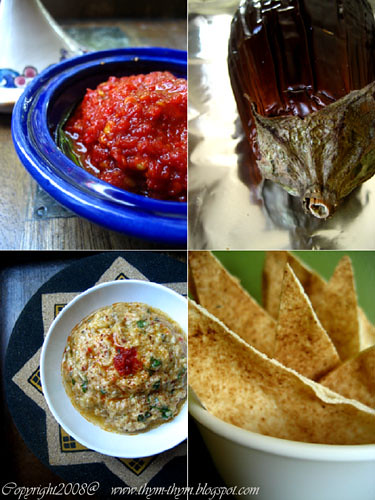


Spicy Eggplant and Yogurt dip


The meals there were a matter of mood, luck and sometimes bravery. While my sister was in charge of doing the dishes and keeping the music going, I was in charge of feeding us and keeping us safe. To cook I had to bring out the folding table from under my sister’s bed (I had the oven and one folding chair under mine), put it in the middle of the room, place the electric stovetop on it, sit on my knees on the corner of the bed and keep the door shut at all time to avoid an accident. Dinners were simple, convenient and meant to keep us from starving. Rice, pasta, fruits and cheese were often on the table; the most sophisticated meals I’ve made being a ratatouille and chicken saffron rice.

Sometimes, when feeling fancy, we would go to the nearby butcher and by a rotisserie chicken, to which he would always add a loaf of bread for free. That night, we knew dinner was going to be savored blissfully; when other times, when feeling lazy, and brave, we would dine at the dinning hall. Standing in line, we would slide our steel trays along the kitchen windows to see our plates filled with, once more, what is supposed to be mashed potatoes, a suspicious fish soup, unseasoned cucumber and tomatoes salad, a slice of bread, cheese and plain yogurt. When extremely hungry, and extremely fearless, we would gulp down the soup, leave out the mashed potatoes and take the salad, bread, cheese and yogurt to our room. That night, we knew dinner was ruined and that our fridge was, yet again, going to add another cup of yogurt to its shelf. By the end of the week, and four cups of plain yogurt later, my sister and I sitting on the desk, our feet up on the window, we would feast on cereal and yogurt, yogurt cake and sometimes eggplant and yogurt dip.

We left the dormitory the next year, but took our beloved eggplant dip home with us.


Spicy Eggplant and Yogurt Dip

Recipe: Serves 4-6 people
- 2 medium eggplants
- ½ cup plain yogurt
- 2 tbsp extra virgin olive oil
- 2 garlic cloves, finely minced
- 2 tbsp parsley, finely chopped
- 1 tbsp mint, finely chopped
- 1 tsp harissa
- 1 tsp freshly squeezed lemon juice
- ½ tsp cumin, freshly ground
- Salt
- Pita chips for serving

Preheat the broiler. Line a baking sheet with foil. Prick the eggplants in a few places with a pointed knife so that they will not burst. Put the eggplants under the broiler until the skin is black and blistered. Turn on the other side for a few more minutes. Roast the eggplants for 15-20 minutes, or until they feel very soft when you press them.

When cool enough to handle, peel the eggplants and remove as much seed as possible. Drop the flesh into a colander. Chop the flesh roughly with the point of a knife to let the juice escape.

Pour the eggplants into a bowl and beat in the olive oil, the harissa and the yogurt and mix until it is thoroughly blended. Mix in the rest of the ingredients. Taste and adjust the seasoning if needed.

Spoon into a serving bowl, cover with a plastic wrap and refrigerate until cold. Serve with pita chips (pita wedges baked in a bakeware at 350 for 5 minutes, or until crunchy) The dip is even better served the following day.

Dip épicé d’Aubergine et Yaourt

In Francais Please: Pour 4-6 personnes
- 2 aubergines moyennes
- 100ml de yaourt nature
- 2 c.s d’huile d’olive vierge
- 2 gousses d’ail, finement émincées
- 2 c.s de persil, finement haché
- 1 c.s de menthe fraiche, finement haché
- 1 c.c de harissa
- 1 c.c de jus de citron
- ½ c.c de cumin, fraichement moulu
- Sel
- Chips de pita pour servir

Préchauffer le grill de votre four. Couvrir un tole de patisserie de papier aluminium et mettre dessus les aubergines. Piquer les aubergines tout autour à l’aide d’un coteau pointu et mettre sous le grill jusqu’à ce que la peau noircisse et a se froisser. Retourner l’aubergine de l’autre côté. Eteindre le grill mais laisser le four allumé afin de continuer la cuisson des aubergines pour 15-20 minutes, ou jusqu’à ce qu’elles deviennent molles.

Refroidir les aubergines. Peler, épépiner le plus possible et mettre dans une passoire et couper grossierement avec le pointe du couteau pour se debarasser du jus.

Verser les aubergines dans un bol et y ajouter l’huile d’olive, la harissa et le yaourt et bien mélanger. Ajouter le reste des ingredients et mélanger encore une fois. Rectifier l’assaisonnement.

Mettre dans un bol pour servir. Couvrir de film plastique et mettre au frais jusqu’à ce qu’il refroidissent completement. Servir avec les chips de pita. (Des tranches de pita passées au four, 160C pendant 5 minutes ou jusqu’à ce qu’elles deviennent croustillantes)
Ce dip est encore meilleur le lendemain.

Monday, August 25, 2008

Baked Apricots Filled with Almond Paste / Abricots Fourrés à La Pâte d’Amandes

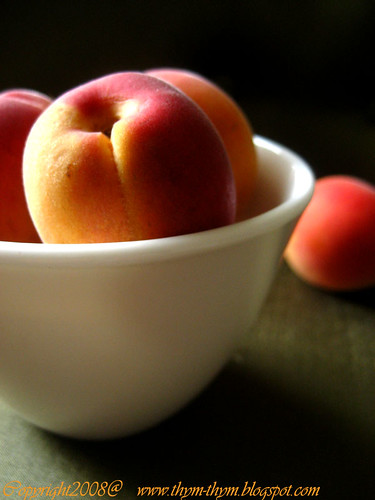
Apricots


I hated apricots for almost five years. I hated them like I now hate pistachios, like I once detested puddings, like I will always despise mint flavored chocolate.
Apricots were, and still are sometimes, deceiving and unpredictable. Apricots were rare, fleeting and dear one year, overwhelming, turned down and abundant the next; 70 pounds abundant, to be exact. And even with quite a big kitchen, they were crowding our space and our heart sitting by the wicker bread pin.

Of course we were delighted when we first received this sweet treasure. We polished it, smelled it and ate it at breakfast, lunch and dinner. We shared them with neighbors. We painted the pits, kept them in our pockets and invented games. My mother and I made apricots jam, apricots tarts, galettes, cakes, fruits salads and clafoutis. We were happy, although busy nearly every afternoon, worried about rotten apricots every night and growing tired of them every morning. Until summer 2003: 20 pounds of apricot jam in our kitchen, snug jeans and one bottle of Pepto Bismol. I was done with apricots.

It took me five years to make peace with apricots again. But not any apricots: ripe, sun kissed, rose blushed apricots that were winking at me last Saturday at the farmer’s market. They were so beautiful, so sweet and meaty that I had to make the ultimate, dead easy, lazy friendly dessert that is Baked apricots with almond paste.

Almond paste based desserts are a staple in our kitchen and in many Mediterranean kitchens. While different recipes and varieties exist, the one that we use in North Africa is basically ground almond to which we add sugar and orange blossom water, or rose water, until we obtain a smooth paste. You halve the apricots, fill them with the almond paste and bake them until they start to soften slightly. That’s all. It is tart, sweet and wonderfully scented. Along with a scoop of ice cream, a cloud of crème Anglaise or Zabaglione, and I might even reconsider eating mint flavored chocolate again. Or may be not!

Baked Apricots filled with Almond Paste


Baked Apricots Filled with Almond Paste

Recipe: Serves 4
- 8 apricots, ripe but still firm
- 4 ounces whole almonds, finely ground
- Caster sugar
- Orange blossom water

Preheat the oven at 350F. Butter a baking dish and set aside.

Halve and pit the apricots. Mix the ground almonds with some sugar, depending on the sweetness of the apricots. Taste the almonds and sugar mixture as you mix to see if you need to add more sugar or not. Start by adding 1 tbsp of orange blossom water to the almonds mixture and add more if necessary until you have a smooth paste.

Fill each apricot half with the almond filling and cover with the other apricot half. Continue with the remaining apricots.
Put them in your prepared pan and bake them for 10-15 minutes, or until the apricots start to soften slightly. Keep an eye on the apricots after 10 minutes, as you don’t want them to fall apart.

Serve warm as it is, or with a scoop of vanilla ice cream. The latter choice happens to be my favorite.

Note: This dessert should be consumed on the same day, as they become mushy once in the fridge.
You can find orange blossom water at Middle Eastern stores.

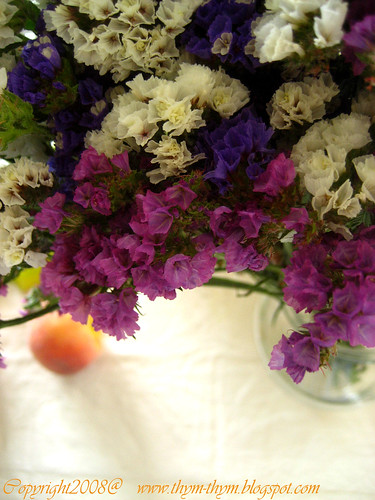
Under the shady Flowers


Abricots Fourrés à La Pâte d’Amandes

In Francais Please: Pour 4 personnes
- 8 abricots, pas trop mûrs
- 100g d’amandes entieres, finement hachées
- Sucre en poudre
- L’eau de fleur d’oranger

Préchauffer le four à 180C. Beurrer un plat allant au four et mettre de côté.

Couper les abricots en deux. Mélanger les amandes hachées avec un peu de sucre. La quantité du sucre depends de la douceur des abricots. Gouter au fur et à mesure le mélange d’amandes pour voir si il vous faut rajouter du sucre. Commencer par verser une c.s d’eau de fleur d’oranger sur le mélange d’amandes, et rajouter si necessaire jusqu’à obtenir une pâte homogene et souple.

Fourrer chaque moitié d’abricots de la pate d’amandes et couvrir de l’autre moitié du fruit. Continuer jusqu’a épuisement des fruits.
Arranger-les dans votre plat préalablement beurré et faire cuire 10-15 minutes, ou jusqu’à ce que les abricots soient tendres. Garder un oeil sur les abricots après 10 minutes de cuisson, car vous ne voulez pas que les fruits s’effritent.

Servir tiede, seuls ou avec une boule de glace à la vanille. La derniere proposition est celle que je préfere.

Note: Ce dessert doit se consommer le jour meme. Une fois au frigo, il commence à se ramollir

Thursday, August 21, 2008

Preserving Summer / Conserver L'été

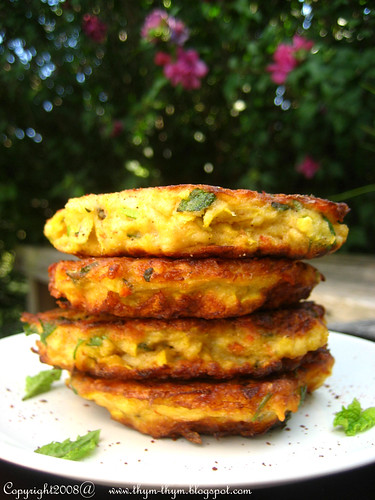
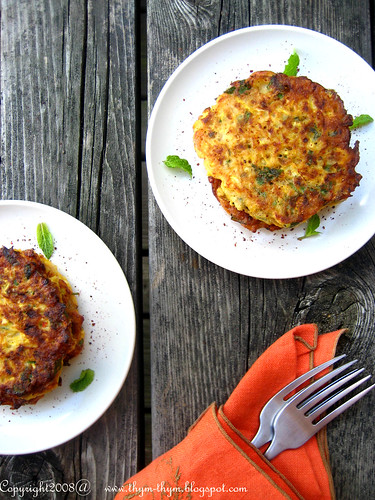
Harissa and Mint Yellow Squah Fritters


I didn’t mean to be away from my blog. I didn’t mean to leave you starring at this olive and chicken tagine, which started to go bad, for this long. August has been very busy around here. And the busiest month is yet to come, both for my kitchen and I.

I don’t know about you but since I can remember, our summer afternoons have always been filled with preserving the year’s bounty. It was a ritual, written in our book of life.
My father would bring us crates of green peppers, tomatoes, apricots and peas and my mother and I would spend our afternoons in the kitchen peeling, seeding, halving, blanching, roasting, cooking and freezing while talking about how this summer looks hotter than the others, why the cousin didn’t get married and how I need to work quickly instead of talking all the time. “El-hadra wel maghzel!” she always tells me, which means: “chitchat and distaff!”
The next day was the same: peel, seed, halve, blanch, roast, cook and freeze, chitchat chitchat, repeat! By the third day, afraid of not being able to reach the lower part of the crates and just growing tired of all these never ending crates laying around the kitchen, my mother would give the rest to neighbors and friends saying to herself that we have fairly enough for the winter. Until next summer comes along with crates, funnels, ladles, pots and wiser hands.

Summer!


This year, although away from my mother’s kitchen, was no exception. Green peppers have been roasted and frozen, strawberries and blueberries were turned into jam, verbena was dried for our late nights herbal teas, basil was turned into pesto, pounds and pounds of ripe, delicious tomatoes were turned into the most exquisite tomato sauce and hot peppers were either roasted and frozen, or dried and turned into Mo’s, that would be my other half, signature hot sauce: Harissa.

Although being a North African condiment, I didn’t grow up eating Harissa that much. The rare occasions where I would have Harissa was at street vendors where they serve it along with Karentika, a chickpea based snack a bit similar to the Italian Farinata. Though it added a nice heat to the snack, I didn’t enjoy Harissa by itself. It was unnecessary hot and that was it. No flavor, no aromatic spices. Just hot!
And then came Mo, with dried chilies in one hand and tales of the best Harissa he’s ever had, while studying in Paris, in the other.
All I knew about Harissa was shattered into million pieces and blended with the dried chilies and the spices, and I loved it. I loved being wrong because my life will never be the same without Mo and his four jars of Harissa in our fridge. And while I wish I could give you the recipe of his Harissa, there is a tiny close in our marriage contract, next to the do-the-dishes-from-time-to-time-honey close, that says that I shall never give away his recipe to anyone. But you can always persuade him to send you a jar or two.

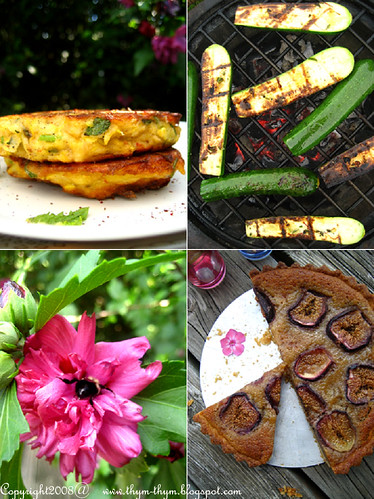
We usually eat Harissa as a condiment with soups, tagines, grilled kefta, couscous…in a word everything but desserts and salads, but this time I wanted to mix it to my usually boring squash fritters batter. Yellow squash can be very bland sometimes and the warmth of Harissa along with cumin, coriander seeds, garlic and mint add a much-needed burst of flavors to the fritters and conclude a happy ending to an intense day of preserving summer.

Yellow Squash Fritters with Mint and Harissa

Recipe: Serves 4
- 1 pound small yellow squash, grated (You can use green zucchini as well)
- 2 cloves garlic, minced
- 2 eggs, lightly beaten
- 2 tbsp all-purpose flour
- 1 small bunch parsley, chopped
- ½ tsp cumin, freshly ground
- ½ tsp coriander seeds, freshly ground
- 1 tsp Harissa paste
- 10 mint leaves, chopped
- Salt and freshly ground black pepper
- Olive oil

Squeeze the grated yellow squash dry by wring it out in a towel. (Using a towel is the best way I’ve found to get rid of the excess water, which you can use to water your plants)

In a large bowl, combine the yellow squash with the rest of the ingredients. Heat a film of olive oil in a nonstick sauté pan over medium heat. For each fritter, pour a generous tablespoon of the squash batter into the pan. Turn them over after the bottom turns golden. Cook on the other side until golden. Drain on paper towels. Serve right away.


Mint and Harissa Yellow Squah Fritters


Beignets de Courgettes jaunes a la Harissa et Menthe

In Francais Please: Pour 4 personnes
- 500g courgettes jaunes, râpées (Vous pouvez la remplacer par de la courgette verte)
- 2 gousses d’ail, émincées
- 2 oeufs entiers, légerement battus
- 2 c.s de farine
- 1 petit bouquet de persil, haché
- ½ c.c de cumin, fraichement moulu
- ½ c.c de graines de coriandre, fraichement moulues
- 1 c.c de harissa
- 10 feuilles de menthe, hachées
- Sel et poivre noir fraichement moulu
- Huile d’olive

Essorer les courgettes râpées dans une serviette pour enlever le plus d’eau possible. (Vous pouvez arroser vos plantes avec l’eau des courgettes)

Dans un bol, mélanger les courgettes essorées avec le reste des ingredients. Faites chauffer un filet d’huile d’huile dans une poêle ainti-adhesive sur feu moyen. Pour chaque beignet, verser une cuillere à soupe du mélange de courgettes dans la poêle. Retourner quand la surface des beignets prendra une belle couleur dorée. Faites cuires l’autre coté jusqu’à obtenir une belle coloration. Egoutter sur du papier absorbant et servir tout de suite.